Vastu Dosh Remedies

FIVE SIGNS YOUR HOME HAS VASTU DOSH (AND SIMPLE FIXES BEFORE YOU CALL AN EXPERT)

Have you ever walked into a home and felt instantly at ease, and into another and felt inexplicably heavy, restless, or drained? That reaction is rarely “just in your head.” According to Vastu Shastra, a space carries energy, and when that energy flows wrong, it can quietly affect your health, finances, relationships, and peace of mind.

Vastu Dosh simply means an imbalance, usually caused by the placement of rooms, doors, or objects against the natural flow of the five elements and directional energies. The good news: many common doshas can be spotted, and even softened, before you ever need a full consultation.

1. The Front Door Faces the Wrong Direction

The main entrance is considered the mouth through which energy enters your home. A door that opens directly opposite a toilet, staircase, or a sharp wall corner can disrupt the flow of positive energy right from the threshold.

Simple fix: Keep the entrance well-lit and clutter-free, and place a small bowl of rock salt or a tulsi plant nearby to help absorb negative energy.

2. The Kitchen Is in the Wrong Corner

In Vastu, the kitchen represents Agni (fire) and ideally belongs in the south-east corner. A kitchen placed in the north-east, the zone of water and spiritual energy, is one of the most common doshas linked to health and financial stress in a household.

Simple fix: If relocating isn’t possible, place the stove itself so the cook faces east while cooking, and keep the space extremely clean, as clutter here compounds the imbalance.

3. Clutter Is Piling Up in the North-East

The north-east corner of any home or room is considered the seat of clarity, growth, and spiritual energy. When this corner becomes a dumping ground for old furniture, boxes, or unused items, it’s believed to block opportunities and mental clarity for the whole household.

Simple fix: Clear this corner completely if you can. Even a small, open, well-lit space here a plant, a diya, or simply empty floor can shift the feel of the entire home.

4. Mirrors Are Poorly Placed in the Bedroom

A mirror facing the bed directly is one of the most talked-about doshas in Vastu, believed to create restlessness, disturbed sleep, and tension between couples, as it’s thought to “double” negative energy circulating during rest.

Simple fix: Reposition the mirror so it doesn’t reflect the bed, or cover it at night with a cloth if moving it isn’t possible.

5. There’s a Persistent, Unexplained Heaviness in One Room

Sometimes a dosh doesn’t announce itself through obvious layout issues it shows up as a feeling. A room where conversations always turn tense, where sleep is never quite restful, or where you feel drained despite adequate rest, may be sitting on disturbed energy, structural imbalance, or even a Vastu Dosh Mochan requirement.

Simple fix: Increase natural light and airflow immediately, and consider a Vastu Dosh Mochan Yantra placed correctly, ideally after a proper diagnosis of your space.

When Simple Fixes Aren’t Enough

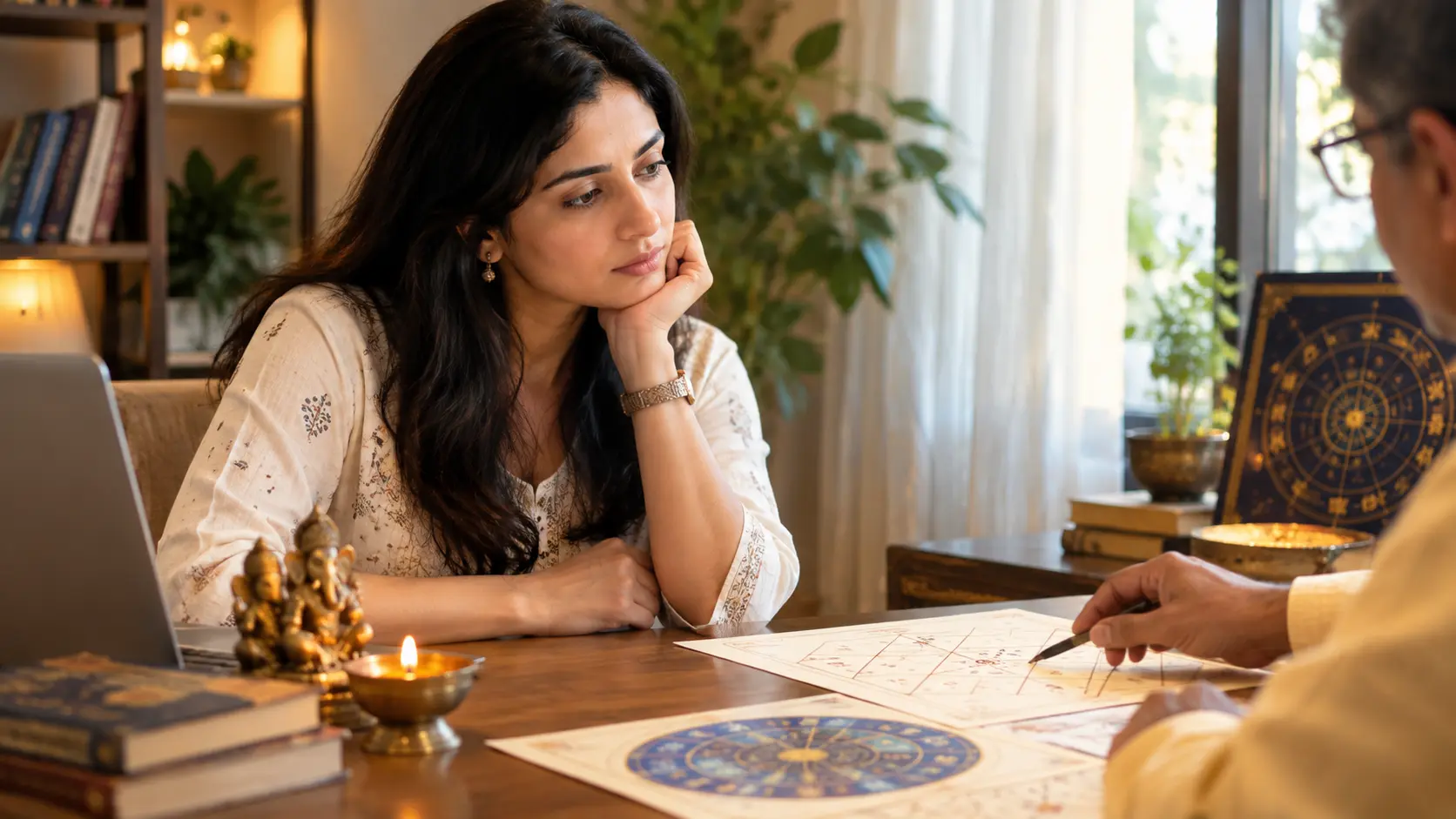
Vastu is a science of subtlety the direction of a single door, the placement of a single mirror, or an imbalance you can’t see with the naked eye can quietly shape years of struggle in health, wealth, or relationships. Small corrections at home can ease minor imbalances, but a full Vastu reading mapping your home against the actual directional chart is what identifies the root dosh rather than its surface symptoms, and prescribes remedies suited specifically to your space and birth chart.

Frequently Asked Questions

1. Can Vastu Dosh really affect health and finances?

Vastu is based on the idea that a home’s energy flow influences the wellbeing of the people living in it, including physical health, mental peace, and financial stability.

2. Do I need to break walls or renovate to fix Vastu issues?

Not always. Many doshas can be softened using remedies like yantras, specific colours, plants, mirrors, or rearranging furniture, without structural changes.

3. How is a Vastu consultation different from what I read online?

A personal consultation examines your home’s actual directional chart alongside your birth details, giving remedies tailored to your specific space rather than generic advice.

4. Is Vastu only for homes?

No. Vastu principles apply equally to offices, factories, shops, and even plots of land before construction begins.

Final Thought

Your home is more than four walls it is a living reflection of the energy you invite in every day. A few mindful corrections today can restore the balance your space, and your life, has been asking for.
Book a Vastu consultation with Yoginii Megha →

7 Signs You Should Get a Personalized Kundli Consultation

7 Signs You Should Get a Personalized Kundli Consultation

Life has its natural ups and downs that’s normal. But sometimes, the pattern feels different. Things don’t just go wrong once; they go wrong repeatedly, in ways that don’t match your effort, your choices, or your past experience. When that happens, it’s often your Kundli trying to tell you something.

Here are seven signs that it may be time for a personalized Kundli consultation.

1. Unexpected Problems Keep Repeating

You solve one issue, and another appears in its place almost like a pattern rather than coincidence. In Vedic astrology, recurring, unrelated disruptions often point to an active Dasha-Antardasha period or an unresolved dosha influencing multiple areas of your life at once.

2. Sudden Health Issues With No Clear Cause

A sudden illness that doesn’t fit your lifestyle, medical history, or habits can be more than just bad luck. Certain planetary placements and transits are known to correlate with unexpected health disruptions, and a Kundli reading can help you understand the timing and possible remedies.

3. Career or Income Setbacks That Don’t Make Sense

A sudden dip in salary, a stalled promotion, or a business decision that should have worked but didn’t when these happen despite your best effort, it’s worth looking at your 10th house and current planetary period rather than just your strategy.

4. Marriage or Relationship Strain That Feels Out of Character

If conflicts, misunderstandings, or distance are showing up in a relationship that was previously stable, this is one of the most common reasons people seek a consultation. Planetary transits affecting the 7th house can create relationship turbulence that has little to do with either partner’s actions.

5. You’re Trying to Fix Things, But They Keep Getting Worse

This is a key sign. When your usual efforts the things that normally work for you stop working, and the situation worsens despite genuine effort, it often signals a deeper astrological cause rather than a practical one.

6. Something Happens That’s Never Happened to You Before

An unprecedented event one that breaks your normal pattern of life entirely is often tied to a major transit (like Sade Sati or a dosha activation) rather than routine circumstance.

7. A Persistent Feeling That “Something Isn’t Right”

Many people come for a consultation not because of one big event, but because of an ongoing sense that their life isn’t flowing the way it should and they can’t pinpoint why. A Kundli reading often brings clarity where logic alone hasn’t.

Frequently Asked Questions (FAQs)

Q: How is a Kundli consultation different from just reading my horoscope?

A horoscope is generalized for your zodiac sign. A Kundli consultation is based on your exact birth date, time, and place, giving a far more precise picture of your current planetary influences.

Q: Can a Kundli consultation actually explain why things are going wrong?

It won’t replace practical problem-solving, but it can reveal the underlying planetary timing behind recurring or unexpected patterns which often helps make sense of what’s happening and what remedies may help.

Q: How soon can these issues improve after a consultation?

This varies by individual and by the specific dosha or dasha involved. Your consultation will include guidance on remedies and realistic timelines.

Q: Do I need to believe in astrology for this to help?

An open mind helps, but many people come simply because life feels stuck and they want clarity belief isn’t a prerequisite for a reading.

Q: What information do I need to provide?

Your exact date, time, and place of birth accuracy here matters for a precise Kundli.

If two or more of these signs feel familiar, it may be time for a personalized Kundli consultation. Book your session today and get clarity on what’s really happening and how to move forward.

Book a consultation with Yoginii Megha →

Zodiac Sign vs. Ascendant Why They Aren’t the Same Thing

Your Zodiac Sign and Your Ascendant Are Not the Same Thing

It’s one of the most common moments in my consultations.

A client comes to me for a Kundli reading. I study their birth chart and tell them their Ascendant… their Lagna… is a particular sign. And almost instantly comes the same reaction: “But that can’t be right — my zodiac sign is completely different. I was born in a different month entirely.”

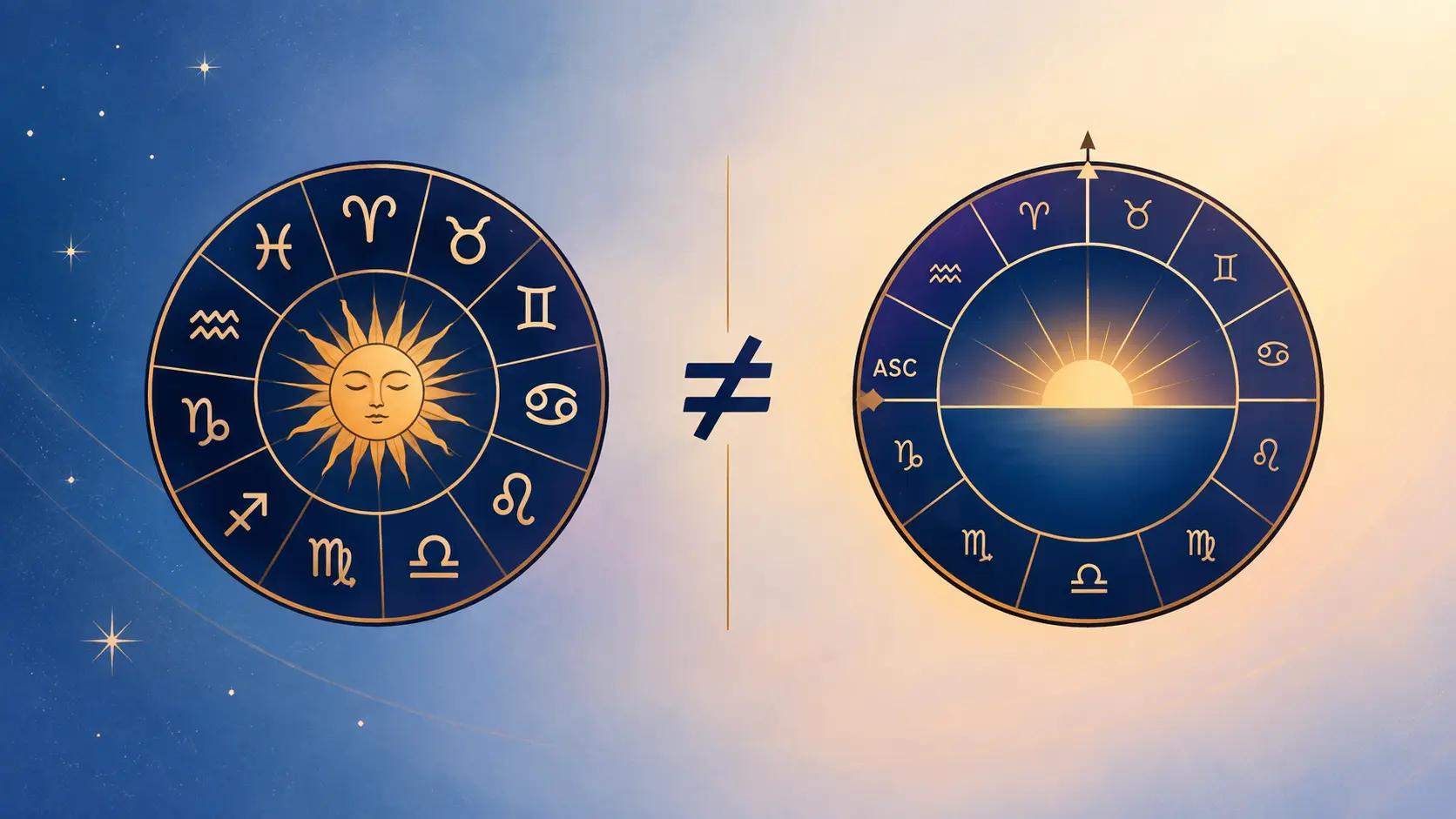
They’re not wrong and neither am I. This happens so often that it’s worth explaining properly, once and for all: your Zodiac Sign and your Ascendant are two completely different things, calculated in two completely different ways. Knowing one doesn’t tell you the other.

What Is a Zodiac Sign?

Your Zodiac Sign, also called your Sun Sign, is based simply on your date of birth. The sky is divided into twelve sections and the Sun moves through each one over the course of the year. Whichever sign the Sun was passing through on the day you were born becomes your Zodiac Sign.

This is why it’s so easy to know: you just need your birth date. Anyone born between the same two dates every year shares the same Zodiac Sign, regardless of what time they were born or where.

What Is an Ascendant (Lagna)?

Your Ascendant, or Lagna, is a different calculation entirely. It’s the sign that was rising on the eastern horizon at the exact moment you were born — down to the minute and specific to the place you were born in.

In Vedic astrology, this isn’t a small detail. Your Ascendant becomes the First House of your Kundli — the foundation the entire chart is built on. It’s the starting point from which every other house, planet, and aspect is read.

This is why the Ascendant tells us so much more than a Zodiac Sign alone can:

  • Your personality and temperament
  • How you approach life and challenges
  • Your physical appearance and constitution
  • How the world perceives you at first impression
  • The overall structure the rest of your horoscope is read from

An Example to Make It Clear

Say a client was born in a month that makes their Zodiac Sign, for instance, Leo — that part is fixed and easy to know just from the calendar.

But when I calculate their Kundli using their exact birth time and place, their Ascendant might come out as Pisces. Both are correct at once.

Their Sun Sign is Leo. Their Lagna is Pisces.

There’s no contradiction here — these are simply answers to two different questions:

  • “Where was the Sun on my birth date?” → Zodiac Sign
  • “What was rising on the horizon the moment I was born?” → Ascendant

Why the Ascendant Changes So Quickly

Here’s the part that surprises people the most: your Ascendant shifts roughly every two hours. So two people born on the exact same date, even sharing the same Zodiac Sign, can have entirely different Ascendants if they were born at different times of day.

This is exactly why, when you come for a Kundli reading, I always ask for your precise birth time and birthplace, not just your date. A gap of even a few minutes, especially near a sign transition, can change your Lagna, and with it, the entire foundation of your chart.

The Takeaway

You don’t need to choose between your Zodiac Sign and your Ascendant. You don’t have to decide which one is “really” you. Think of your Kundli as a full map: your Zodiac Sign is one point on it, but your Ascendant is the starting point that gives the whole map its shape and direction.

So the next time an astrologer tells you your Ascendant is different from the sign you’ve always known, you’re both right. Your Zodiac Sign is just one piece of the story. Your Kundli tells the rest.

Frequently Asked Questions

1. Can my Zodiac Sign and Ascendant really be different?

Yes, and in fact it’s the norm rather than the exception. They’re calculated from two different things — the Sun’s position on your birth date versus what was rising on the horizon at your exact birth time — so having two different signs is completely expected.

2. Why do astrologers insist on my exact birth time?

Because the Ascendant can shift within a couple of hours. Even a small gap in birth time, especially near a sign transition, can change your entire Lagna, and with it, the foundation of your Kundli.

3. What should I share when booking a consultation?

Your accurate date of birth, exact birth time, and birthplace. The more precise these are, the more precisely I can calculate and interpret your Kundli.

4. Is my Ascendant “more real” than my Zodiac Sign?

Not more real, just more foundational. Both hold meaning; the Ascendant simply anchors the structure of your entire chart as the First House.

Book a consultation with Yoginii Megha →

couple-love

WHY DO I KEEP ATTRACTING THE SAME TYPE OF PAINFUL RELATIONSHIP?

You promised yourself it would be different this time. And yet — here you are again, in a relationship that feels strangely familiar in the worst way. The same betrayal, dressed in a different face. The same silence, spoken by a different voice. The same ache, wearing someone else’s name.

If this sounds like your story, I want you to know something before we go any further: you are not unlucky and you are not broken. You are simply repeating a pattern your soul hasn’t yet finished understanding.

Relationships Are Not Random — They Are Assignments

In my years of astrological and past-life work, I have never met a “coincidental” relationship. Every significant person who enters your life — the one who loved you well, and the one who didn’t — arrives carrying a purpose. Some come to comfort you. Some come to complete a lesson from long before this lifetime. And some come, again and again in different bodies, until you finally learn what they were sent to teach you.

When you keep attracting the same wound, it isn’t the universe punishing you. It’s your soul circling back to a lesson you’re ready to finally learn — often about self-worth, boundaries, or the belief that love must be earned through suffering.

The Mirror, Not the Villain

Here is a truth I share gently but firmly in session: the people who hurt us are rarely the root cause. They are the mirror. A partner who is distant may be reflecting your own long-buried fear of not being enough. A partner who is controlling may be reflecting a childhood where your voice was never truly heard.

Astrology often reveals this with startling clarity. Certain placements — a heavily afflicted Venus, a difficult 7th house, or karmic shadow-planets like Rahu and Ketu sitting across your relationship houses — point to unresolved emotional patterns still asking to be healed. Past Life Regression frequently reveals why: a betrayal, an abandonment, or an unfinished bond from another lifetime, replaying itself until it is understood rather than merely survived.

An Old Riddle, in a New Light

Think of it like the monsoon rivers of India that keep returning to the same dry riverbed, year after year, even long after the land has changed around them. The river isn’t lost — it is following an old groove worn into the earth. Once that groove is filled in, once the land is reshaped, the water finds an entirely new path.

Your heart works the same way. The old groove is your unresolved pattern. Once you understand it and consciously reshape it, love no longer has to follow the same painful course.

Signs You’re in a Karmic Loop, Not a Curse

  • The relationship feels intensely familiar, almost instantly — as though you’ve done this before.
  • You find yourself repeating the same argument, just with a different partner playing the other role.
  • The connection swings between magnetic highs and deeply painful lows.
  • Deep down, you sense you are here to learn something, not simply to be loved.
  • Ending the pattern brings not just sadness, but relief — a sense of finally being free.

A Session I Remember

A client once came to me convinced she was “cursed” in love — three relationships, three eerily similar heartbreaks. In her regression, she uncovered a lifetime where she had been left behind unexpectedly, without ever getting the chance to say goodbye. She wasn’t repeating bad luck; she was unconsciously recreating that unfinished goodbye, again and again, hoping this time to finally have closure. Once she saw it clearly, the pattern — for the first time in her adult life — began to loosen.

Frequently Asked Questions

1. Does this mean I’m doomed to repeat this pattern forever?

No. Karmic patterns exist to be understood and released, not endured indefinitely. Awareness is the first real step out of the loop.

2. How can astrology show relationship karma?

Your 7th house, Venus, and the Rahu-Ketu axis are traditionally read for recurring relationship themes and unresolved karmic imprints from past lives.

3. Can Past Life Regression really change my current relationships?

It cannot rewrite the past, but by revealing the root of a pattern, it often removes the emotional charge behind it — allowing you to respond differently going forward.

4. What if the pattern isn’t about a past life at all?

Not every repeated pattern is karmic; some are shaped by this lifetime’s experiences. A combined reading helps clarify which lens applies to you.

Final Thought

The heart doesn’t repeat its pain to punish you — it repeats it until you finally understand it. The moment you do, the old groove begins to fill in, and love is free to find an entirely new path.

Book a consultation with Yoginii Megha →

reading-lines-hand-man-s-hands-close-view

WHAT YOUR PALM IS REALLY TRYING TO TELL YOU: A GUIDE TO HASTREKHA SHASTRA

Have you ever looked down at your own palm and wondered what those lines really mean? You’re not alone and the answer runs far deeper than most people realize.

In the Indian tradition, palmistry is known as Hastrekha Shastra, a branch of the ancient science of Samudrik Shastra the study of understanding a person through the physical and subtle characteristics of the body. Legend holds that this knowledge was first revealed by Lord Shiva at the request of Goddess Parvati. And contrary to popular belief, it is far more than simply “reading lines.”

Samudrik Shastra takes in a person’s height, weight, fingers, body structure, gait, laughter, facial features, eyes, ears, lips, teeth, nails, skin, complexion, voice, and temperament, alongside the seven bodily essences (Sapta Sara) and the five elements Agni (Fire), Jala (Water), Prithvi (Earth), Vayu (Air), and Akasha (Ether) that shape a person’s constitution and nature.

It goes even further, into Sattva, mental qualities, psychological expression, gestures, eye contact, behaviour, and traditional concepts tied to past-life impressions and karma. As an astrologer and practitioner of the occult sciences, I don’t approach palmistry as a simple reading of lines. I approach it as a holistic study of who you are — your personality, tendencies, strengths, challenges, and the larger journey your life is on.

Which Hand Should Be Read?

One of the most common questions I hear is: should I show you my left hand or my right?

Traditional Hastrekha Shastra doesn’t give a single answer it depends on several factors: gender, birth time, lunar phase, marital status, age, and independence:

  • Someone born in Shukla Paksha (the waxing Moon) is traditionally examined through the left hand; someone born in Krishna Paksha (the waning Moon), through the right.
  • For both men and women, the left hand is traditionally significant for night births, and the right hand for day births.
  • A financially dependent woman, particularly one dependent on her husband’s income, is traditionally read through the left hand, while an independent, earning woman is read through the right.
  • The left hand is also traditionally emphasized for unmarried individuals, ascetics, dependent men, and young children.

Different hands are also traditionally linked to different areas of life mother, father, spouse, family, birthplace, fortune, dharma, comforts, and material circumstances.

In my own practice, however, I prefer to read both hands rather than relying on just one. Your dominant hand reflects your active choices, present circumstances, and the way you are actively shaping your life. Your non-dominant hand reveals your inherent tendencies, natural potential, and deeper patterns you were born with. A truly comprehensive reading comes from comparing both their lines, mounts, shapes, markings, and how they change over time.

The Three Major Lines of the Palm

Every palm reading rests on three foundational lines the Heart Line, Head Line, and Life Line. None of these lines should ever be read in isolation; their length, depth, clarity, direction, breaks, branches, and relationship to one another all matter.

The Heart Line (Hridaya Rekha): Speaks to your emotional and relational world. Traditionally tied to love, affection, attachment, and sensitivity, its formation offers insight into your emotional nature and how you approach relationships.

The Head Line (Mastishka Rekha): Also known as the Mind Line, it reflects how your mind works your intellect, memory, concentration, reasoning, decision-making, imagination, and mental stability. Its relationship to the Life Line and its direction toward the Lunar Mount add further layers of meaning.

The Life Line (Jeevan Rekha): Begins between the thumb and index finger and curves around the Mount of Venus toward the wrist. It’s traditionally tied to physical vitality, stamina, energy, resilience, and the major transitions of your life also known as Kula Rekha in some traditional texts. Importantly, it is not a measurement of how long you will live. Longevity is assessed through a much broader reading of the palm, including other lines, mounts, and markings.

No single line ever tells the whole story. Every line speaks in relation to the others and to the mounts, markings, hand shape, and finger structure that surround it.

Hand Shapes and the Four Elements

The shape of your hand lays the foundation for understanding your basic temperament, traditionally classified according to the four elements:

  • Earth Hands — Broad, square, with shorter fingers. Practical, stable, disciplined, and grounded.
  • Air Hands — Square or rectangular palms with longer fingers. Intellectual, communicative, curious, and analytical.
  • Water Hands — Longer palms with long, slender fingers. Sensitive, intuitive, imaginative, and empathetic.
  • Fire Hands — Longer palms with shorter fingers. Enthusiastic, confident, ambitious, and driven to act.

Your hand shape sets the personality framework which is then refined and deepened through the lines, mounts, fingers, nails, and markings unique to you.

Vedic Insight: Auspicious Marks (Shubh Chinh)

Beyond the major lines, traditional Hastrekha Shastra places great importance on Shubh Chinh auspicious marks that appear on the palm, such as a star, trident, lotus, fish, or conch. These symbols are believed to carry deep significance, often pointing to blessings related to fortune, spiritual inclination, protection, or success arriving at a particular stage of life.

A mark near the Mount of Jupiter, for instance, is traditionally associated with leadership and recognition, while one near the Mount of Sun may point toward creative or reputational success. These marks are never read in isolation their meaning is shaped by their placement, clarity, and the surrounding lines and mounts, making an experienced eye essential to interpreting them correctly.

Common Myths About Palmistry

Palmistry carries a lot of misconceptions:

  • Myth 1: The Life Line predicts your exact lifespan.
    Reality: It speaks to vitality, constitution, energy levels, and major life transitions.
  • Myth 2: Astrologers should only read one hand.
    Reality: A meaningful, accurate reading compares both the dominant and non-dominant hands.
  • Myth 3: Palmistry is simple fortune-telling.
    Reality: It is a holistic study of Samudrik Shastra, analyzing hand shape, mounts, fingers, lines, and physical cues together.
  • Myth 4: Your palm lines are fixed forever.
    Reality: Lines shift and evolve over time as your consciousness, choices, habits, and life path change.

Frequently Asked Questions (FAQs)

1. Which hand should be read?

Traditionally it depends on factors like gender, birth time, and marital status, but a complete reading looks at both hands comparing the dominant hand (your present choices and active path) with the non-dominant hand (your inherent blueprint).

2. Does a short life line mean a short life?

No. This is one of the biggest myths in palmistry. The Life Line reflects vitality, resilience, and major life transitions not the number of years you’ll live. Longevity is assessed through a comprehensive reading of multiple mounts and secondary lines.

3. Can palm lines change?

Yes. Palm lines can shift over time, reflecting your evolving experiences, conscious decisions, mindset, and life circumstances. A reading today can look noticeably different after several years.

4. Left hand vs. right hand for women?

Traditionally, a financially dependent woman is read through the left hand, while an independent, earning woman is read through the right hand. However, examining both hands provides the most complete and accurate insight.

5. Is palmistry scientifically proven?

Palmistry is an ancient observational discipline rooted in Samudrik Shastra. It is best approached as a profound intuitive framework for self-understanding, pattern recognition, and spiritual guidance rather than a clinical science.

Ready to Discover What Your Palm Reveals?

Reading your own palm from an article is one thing having it read by someone trained in the full depth of Hastrekha Shastra is another entirely. If you’re curious about what your lines, mounts, and hand shape reveal about your relationships, career, mind, and life path, I’d love to guide you through a personal reading.

Book your one-on-one palm reading consultation today message me to book your slot and discover what your hands have been trying to tell you all along.

Book a Palm Reading session with Yoginii Megha →

Kaal Sarp Dosh

KAAL SARP DOSH IN ASTROLOGY: MEANING, TYPES, EFFECTS & REMEDIES

If you’ve ever consulted an astrologer and heard the words “Kaal Sarp Dosh,” you may have felt a flicker of worry. In Vedic astrology, this is one of the most talked-about and most misunderstood planetary configurations. It forms when all seven classical planets (Sun, Moon, Mars, Mercury, Jupiter, Venus, and Saturn) sit enclosed within the axis of Rahu and Ketu, the two shadow points that represent the Moon’s nodes. Rahu symbolizes desire, ambition, and unfinished worldly pursuits; Ketu represents detachment, past-life imprints, and karmic residue. Together, they don’t curse a life, they frame it, marking a soul’s unresolved lessons from lifetimes past. Understood correctly, Kaal Sarp Dosh is less a warning and more an invitation to grow.

How Kaal Sarp Dosh Forms in a Kundli

Every birth chart (Kundli) contains twelve houses, and Rahu and Ketu always sit exactly 180 degrees apart, splitting the chart into two halves. Kaal Sarp Dosh forms when all seven classical planets fall entirely within one half hemmed in between Rahu on one side and Ketu on the other, like a serpent coiling around them. When this happens completely, astrologers call it Purna (Complete) Kaal Sarp Dosh. If even one planet slips outside the axis, it’s typically classified as Anshik (Partial) Kaal Sarp Dosh, considered comparatively milder, though opinions among astrologers vary on how strictly this rule should be applied.

It’s worth remembering that this configuration should never be read in isolation. The dignity of each planet, the houses they occupy, their aspects and conjunctions, and the yogas present elsewhere in the chart all shape how or even whether this dosh actually expresses itself in a person’s life.

The 12 Types of Kaal Sarp Dosh

The classification depends entirely on which house Rahu occupies and which houses the planets are trapped between. Here’s a quick reference:

Type Rahu House Ketu House Life Area Most Affected
Anant 1st 7th Inner peace, marriage, legal disputes
Kulik 2nd 8th Family harmony, finances
Vasuki 3rd 9th Siblings, friendships, faith
Shankhpal 4th 10th Home, career, parental bonds
Padma 5th 11th Children, progeny concerns
Mahapadma 6th 12th Health, debts, enemies
Takshak 7th 1st Marriage, romantic relationships
Karkotak 8th 2nd Sudden setbacks, finances
Shankhnaad 9th 3rd Fortune, father, authorities
Patak 10th 4th Career, domestic happiness
Vishakt 11th 5th Friendships, disputes, health
Sheshnag 12th 6th Expenses, hidden challenges, health

Each type carries its own traditional narrative Anant Kaal Sarp Dosh, for instance, is often linked to restlessness and marital friction, while Padma Kaal Sarp Dosh is associated with delays or worries connected to children. But no two people experience the “same” dosh identically, because the rest of the chart always colors the outcome.

Kaal Sarp Dosh Effects on Life

Broadly, Kaal Sarp Dosh is said to touch relationships, career, health, family stability, and mental peace, though which area feels the pressure most depends on the specific type present in the chart. Some natives report a persistent sense of being “one step behind,” recurring obstacles just as success seems within reach, or a nagging restlessness that’s hard to name. Others notice friction with siblings, disappointment from friends, or a strained connection with a parent.

But this is only half the picture. Many astrologers also observe that Kaal Sarp Dosh natives often possess unusual intensity, drive, and resilience. The very tension created by Rahu and Ketu can push a person toward extraordinary focus, ambition, or spiritual depth once they learn to work with it rather than fear it. The dosh’s true weight is always determined by the strength of the planets involved, the ongoing planetary period (Dasha-Antardasha), and the benefic influences present elsewhere in the Kundli.

Remedies for Kaal Sarp Dosh

Remedies for Kaal Sarp Dosh aren’t about erasing a placement that isn’t how astrology works but about consciously balancing Rahu and Ketu’s energies to ease their more disruptive effects. Traditional practices include:

  • Installing a Kaal Sarp Yog Shanti Yantra at home
  • Chanting “Om Namah Shivaya” and the Mahamrityunjaya Mantra
  • Reciting the specific mantras associated with Rahu and Ketu, along with related donations
  • Worshipping Nag Devata and observing Nag Panchami with fasting or prayer
  • Performing Shiv Rudrabhishek and offering water to a Peepal tree
  • Conducting Pitru Tarpan or Shraddha on Amavasya
  • Feeding birds, offering food and water to those in need, and charitable giving

No single remedy suits everyone. The right approach depends on which houses Rahu and Ketu occupy, the strength of the surrounding planets, and the Dasha currently running. This is exactly why a personalized reading rather than a generic ritual tends to bring the most meaningful results.

Kaal Sarp Dosh – Myth vs. Reality: Is It Always Negative?

Here’s where popular belief and classical astrology diverge sharply:

  • Myth: Kaal Sarp Dosh guarantees a difficult, unlucky life.
    Reality: No single yoga decides an entire destiny. A Kundli is a web of dozens of interacting placements, and strong benefics can significantly soften or even transform this configuration’s effects.
  • Myth: It causes lifelong suffering.
    Reality: Its intensity ebbs and flows with age, Dasha, and transits; some phases will feel heavier, others notably supportive.
  • Myth: Every person needs the same remedy.
    Reality: Remedies work best when tailored to the individual chart.

The bottom line: Kaal Sarp Dosh is a karmic pattern worth understanding, not a sentence worth fearing.

Frequently Asked Questions (FAQs)

1. How do I know if I have Kaal Sarp Dosh?

It’s identified by checking whether all seven classical planets fall within the Rahu-Ketu axis. This requires a full Kundli analysis rather than a quick glance, since the type and strength of the formation matter as much as its presence.

2. Is Kaal Sarp Dosh always harmful?

No. Its real impact depends on planetary strength, house placements, aspects, other yogas, and the Dasha in effect the same dosh can play out very differently from one chart to another.

3. At what age does Kaal Sarp Dosh end?

There’s no fixed age. Its influence is felt in waves, shaped by transits and planetary periods, so some life stages will feel its themes more strongly than others.

4. Can remedies fully cancel Kaal Sarp Dosh?

Remedies help pacify and balance Rahu-Ketu’s energy, but it’s inaccurate to claim any ritual completely erases a birth chart placement. Think of remedies as support, not deletion.

5. Is Kaal Sarp Dosh real, or just superstition?

It’s a recognized concept within Vedic astrology, though interpretations vary among astrologers and it isn’t scientifically validated. For those who follow Jyotish, it’s best approached as a framework for self-understanding not fatalism.

Ready to Know Your Own Chart?

Reading about Kaal Sarp Dosh in general terms is a starting point but every Kundli tells a different story. If you’re curious whether this configuration appears in your chart, and what it specifically means for your relationships, career, or health, a personalized consultation with an experienced astrologer is the best next step. Book your one-on-one Kundli reading today and turn uncertainty into clarity.

Book a Consultation with Yoginii Megha →

Tarot Card Reading

TAROT CARD READING — A JOURNEY OF GUIDANCE, CLARITY & SELF-DISCOVERY

Tarot is an ancient European system of symbolic wisdom that’s become one of the world’s most trusted tools for self-reflection and guidance. A tarot card reading isn’t fortune-telling it’s a conversation between intuition and imagery, where a reader interprets the cards’ symbols to illuminate the energies around a situation.

Think of it less as predicting your future and more as mapping your present. Tarot reveals the patterns, emotions, and choices already shaping your path in love, career, money, or personal growth often surfacing what your subconscious already knows but hasn’t put into words.

Each card carries its own message, but the deeper truth is this: destiny opens doors, you choose which ones to walk through. Tarot isn’t about fear or fate it’s about clarity, self-awareness, and making conscious choices at life’s crossroads.

Understanding the Tarot Deck Major & Minor Arcana

A tarot deck holds 78 cards, divided into two families that work together to tell your story.

The Major Arcana: – 22 cards, from The Fool to The World represent life’s big themes: major turning points, karmic lessons, and the soul-level journey you are moving through. When a Major Arcana card appears, it signals that something significant is at play not a small daily matter, but a chapter shaping your larger path.

The Minor Arcana: – 56 cards across four suits — reflect the everyday textures of life:

  • Wands – ambition, passion, career, and creative energy
  • Cups – emotions, relationships, and matters of the heart
  • Swords – thoughts, communication, conflict, and decision-making
  • Pentacles – money, career, health, and material security

Together, the Major and Minor Arcana create a complete map the Majors showing the larger lesson, the Minors showing how it’s unfolding in the practical details of your daily life.

Popular Tarot Spreads and What They Reveal

The “spread” is simply the pattern in which cards are laid out, and each one is designed to answer a different kind of question.

  • Three-Card Spread (Past, Present, Future) — A quick, clear snapshot of where you’ve come from, where you stand now, and where things are heading.
  • Celtic Cross Spread — A detailed ten-card reading used for complex or layered questions, revealing hidden influences, obstacles, and likely outcomes.
  • Relationship Spread — Explores the dynamics between two people what each person feels, brings, and needs from the connection.
  • Career Spread — Focuses on professional growth, obstacles, and upcoming opportunities.
  • Yes/No Spread — A focused, single-card or small draw for direct clarity on a specific decision.
  • Chakra / Health Spread — Maps energetic balance across the seven chakras, offering insight into emotional and physical wellbeing.

The right spread depends entirely on your question a scattered worry needs a wider map; a focused decision needs a single, honest card.

The Hidden Connection Between Tarot & Numerology

Tarot and Numerology are two powerful systems of divination, and when they are read together, they can offer a much deeper and more layered understanding of a situation. In my approach to Tarot, I do not interpret a card by looking only at its imagery, symbolism, or traditional meaning. Every Tarot card carries a numerical vibration, and that number adds another dimension to the message of the card. I connect the energy of the card with its corresponding number, its qualities, and the planetary influence associated with that number. For example, the number 5 represents versatility, communication, movement, adaptability, curiosity, opening up and passion. In Numerology, 5 is associated with Mercury, the planet of communication, intelligence, expression and movement. Therefore, whenever a Tarot card carrying the vibration of 5 appears in a reading, I also bring these qualities of number 5 and Mercury into my interpretation.

The card may therefore speak not only through its visual symbolism, but also through the energetic language of the number and its planetary influence. This combined approach allows Tarot and Numerology to complement each other, creating a more intuitive, comprehensive and nuanced reading where the card tells the story, while the number reveals another layer of its energy.

What to Expect in a Tarot Session with Me

A session begins with your question the clearer and more specific it is, the more precise the guidance can be. I select the spread that best suits what you’re asking, and as I lay the cards, I read them not in isolation but as a flowing conversation between them, layered with intuitive insight and, where relevant, your astrological context.

I always share what I see honestly including the harder cards because a reading that only tells you what you want to hear isn’t real guidance. My aim in every session is not to hand you a fixed prediction, but to help you leave with clarity, a sense of your options, and the confidence to choose your next step consciously.

A Short Note on Reversed Cards

When a card appears upside down in a spread, it doesn’t mean disaster it simply shifts the card’s energy inward or slows its expression. An upright Strength card may point to courage flowing freely; reversed, it may point to self-doubt asking to be worked through before that same courage is ready to show up. Reversed cards are not warnings to fear they are simply asking for a little more awareness before the energy of the card can move forward.

Frequently Asked Questions (FAQs)

1. What is Tarot Card Reading?

Tarot Card Reading is a spiritual guidance and intuitive counseling practice that uses a deck of symbolic cards to provide insight into different areas of life and help individuals gain clarity before making important decisions.

2. Can tarot predict the future?

Tarot highlights the current energies, possibilities, and likely outcomes based on your present circumstances. As your choices and actions evolve, future possibilities may also change.

3. What questions can I ask during a tarot reading?

You may seek guidance on relationships, career, business, finances, family, education, personal growth, spiritual development, or any situation where you need clarity and direction.

4. Is tarot reading connected to spirituality?

Yes. Tarot is often considered a spiritual and intuitive practice that encourages self-reflection, inner awareness, and personal growth while helping you understand the lessons and opportunities present in your life.

5. How can Tarot help me?

Tarot offers guidance, confidence, and a fresh perspective during confusing or challenging situations. It helps you make conscious decisions, understand your strengths and obstacles, and move forward with greater peace of mind.

6. What’s the difference between Major Arcana and Minor Arcana cards?

Major Arcana cards represent significant life themes and karmic turning points, while Minor Arcana cards reflect the everyday details of emotions, work, communication, and material matters.

7. Which tarot spread is right for my question?

It depends on the nature of your question a simple three-card spread suits quick clarity, while layered concerns benefit from a Celtic Cross or a spread designed specifically for relationships, career, or health.

8. How is tarot reading different from Vedic astrology, and can they be used together?

Vedic astrology maps the larger, ongoing patterns of your life through your birth chart, while tarot reflects the present moment and immediate choices. Used together, they offer both the bigger picture and the precise, current guidance within it.

9. What does a reversed card mean?

A reversed card doesn’t signal something negative it usually means the card’s energy is turned inward, delayed, or asking for more awareness before it can fully express itself.

10. Do I need to believe in tarot for it to work?

An open mind helps, but tarot works as a tool for reflection and insight regardless of prior belief many first-time clients arrive skeptical and leave with genuine clarity.

Final Thought

Tarot doesn’t hand you a fixed fate — it hands you a mirror and a map. What you see in that mirror, and which path you choose on that map, is always, ultimately, yours to decide.

Book a Tarot consultation with Yoginii Megha →

LIFE BEFORE LIVES WHY DO WE KEEP RETURNING

LIFE BEFORE LIVES: WHY DO WE KEEP RETURNING?

Have you ever met someone for the first time and felt like you already knew them? Or walked into a place you’d never visited, and something inside you whispered, I’ve been here?

We call these moments coincidences. But what if they’re memories?

In two decades of guiding people through Past Life Regression and Akashic Records healing, I have sat across from hundreds of souls and I can tell you this with quiet certainty: life is not random. You have been here before, and you will come again.

The Soul Doesn’t Arrive Empty-Handed

Most spiritual traditions agree the soul is eternal it doesn’t begin at birth or end at death, only changes form, the way water becomes vapour and returns again as rain. Before you took this body, your soul chose it: the family, the challenges, the people you’d love and lose, and the lessons you came here to learn. Nothing is accidental not the heartbreak that shaped you, nor the struggle you’re facing right now.

Somewhere between childhood and adulthood, most of us forget this. We get swept into ego, fear, and the noise of “what we should be.” That’s when life starts to feel heavy the same painful pattern repeating, a restlessness no achievement can fix. This unease isn’t a malfunction. It’s your soul, gently asking you to come home to yourself.

An Ancient Indian Truth, in One Image

Every evening, we light a diya and when its flame begins to flicker out, we don’t call it dead. We simply touch it to a fresh wick, and the same fire burns on in a new lamp.

This is reincarnation, in its simplest form. The lamp changes each time. The flame your soul remains the same, carrying its light and its unfinished story from one vessel into the next. You are not a new flame each lifetime. You are the same fire, still learning how to light up the room without being consumed by it.

Signs Your Soul Has Lived Before

Many of my clients arrive already carrying these signs they just didn’t have a name for them:

  1. Unexplained fears with no root in this life of water, heights, fire, confinement.
  2. Emotional déjà vu a place, scent, or song that stirs a memory you can’t place.
  3. Instant, intense connections with certain people, for better or worse.
  4. A pull toward an era or culture unrelated to where you grew up.
  5. Recurring dreams in unfamiliar times, often with the same faces.
  6. A talent you never “learned” as if you were simply remembering it.
  7. Chronic pain with no medical cause, often tied to one specific part of the body.

If two or three feel familiar, your soul may be asking you to look backward to finally move forward.

Karmic Relationships vs. Soul Mates

This is one of the most common confusions I help untangle in session.

Karmic relationships arrive like a debt being settled intense, magnetic, often painful, built around lessons in boundaries, self-worth, or forgiveness. Once the lesson lands, they often dissolve, sometimes abruptly.

Soul mates feel like coming home. There is friction, but underneath it lies ease and a sense of rightness souls you’ve likely chosen again and again, not to teach a hard lesson, but to walk further together.

The simplest test: karmic bonds ask “what must I release?” Soul-mate bonds ask ”what can we build, together, this time?”

How the Soul Chooses Its Next Life?

Before rebirth, the soul is believed to review its unfinished lessons and unresolved karma, then choose its next classroom — the family, the body, the hardships that will help it evolve. A soul learning patience may choose long waiting; one learning self-worth may choose an early test. Nothing is punishment; everything is curriculum. This is why the people who challenge us most are so often, paradoxically, our soul’s closest companions across lifetimes.

I remember a client who came to me with anxiety no doctor could explain a racing heart near water, though she’d had no bad experience with it in this life. In one regression, she relived a lifetime that ended in a flood; within that single hour of remembering, twenty years of unexplained panic began to loosen. She didn’t just understand her fear she felt free of it.

This is the quiet miracle of past-life work: you are not fixing something broken. You are remembering something whole.

Frequently Asked Questions

1. Why do souls take birth again?

To learn, evolve, balance karma, and experience lessons that contribute to spiritual growth.

2. Does everyone have a purpose in this life?

Yes. Every soul enters this world with unique lessons, gifts, and a meaningful purpose.

3. What happens if we move away from our life’s purpose?

Life may present recurring challenges, emotional unrest, or situations that encourage us to realign with our true path.

4. Can we discover our soul’s purpose?

Yes. Through self-awareness, spiritual practices, meditation, and modalities such as astrology, past life regression, or Akashic Records, many people gain deeper insight into their soul’s journey.

5. Is destiny fixed?

While certain karmic lessons may be part of the soul’s journey, our choices, awareness, and actions shape how we experience and respond to them.

6. What is a soul contract?

A soul contract is an agreement believed to be made before birth between souls — outlining the roles, relationships, and lessons they will help each other experience in the lifetime ahead.

7. What are the Akashic Records, and how do they relate to past lives?

The Akashic Records are described as an energetic archive holding the experiences of every soul across all its lifetimes. Accessing them can reveal the past-life patterns and karmic imprints still influencing your present life.

8. How does astrology reveal past-life karma?

Certain placements in a birth chart such as Saturn, the Rahu-Ketu axis, or specific houses are traditionally read as signatures of karma carried forward from previous lifetimes, showing which lessons a soul is here to resolve.

9. Can past life regression help me discover my purpose?

Yes. By revealing recurring soul patterns and unresolved lessons across lifetimes, regression often brings clarity about why you are here and what your soul is working to complete.

Final Thought

Your life is not an accident. Every experience has meaning, and every soul carries a unique mission. The more you understand your soul’s journey, the closer you come to living a life filled with purpose, wisdom, and inner peace.

Book a consultation with Yoginii Megha →